
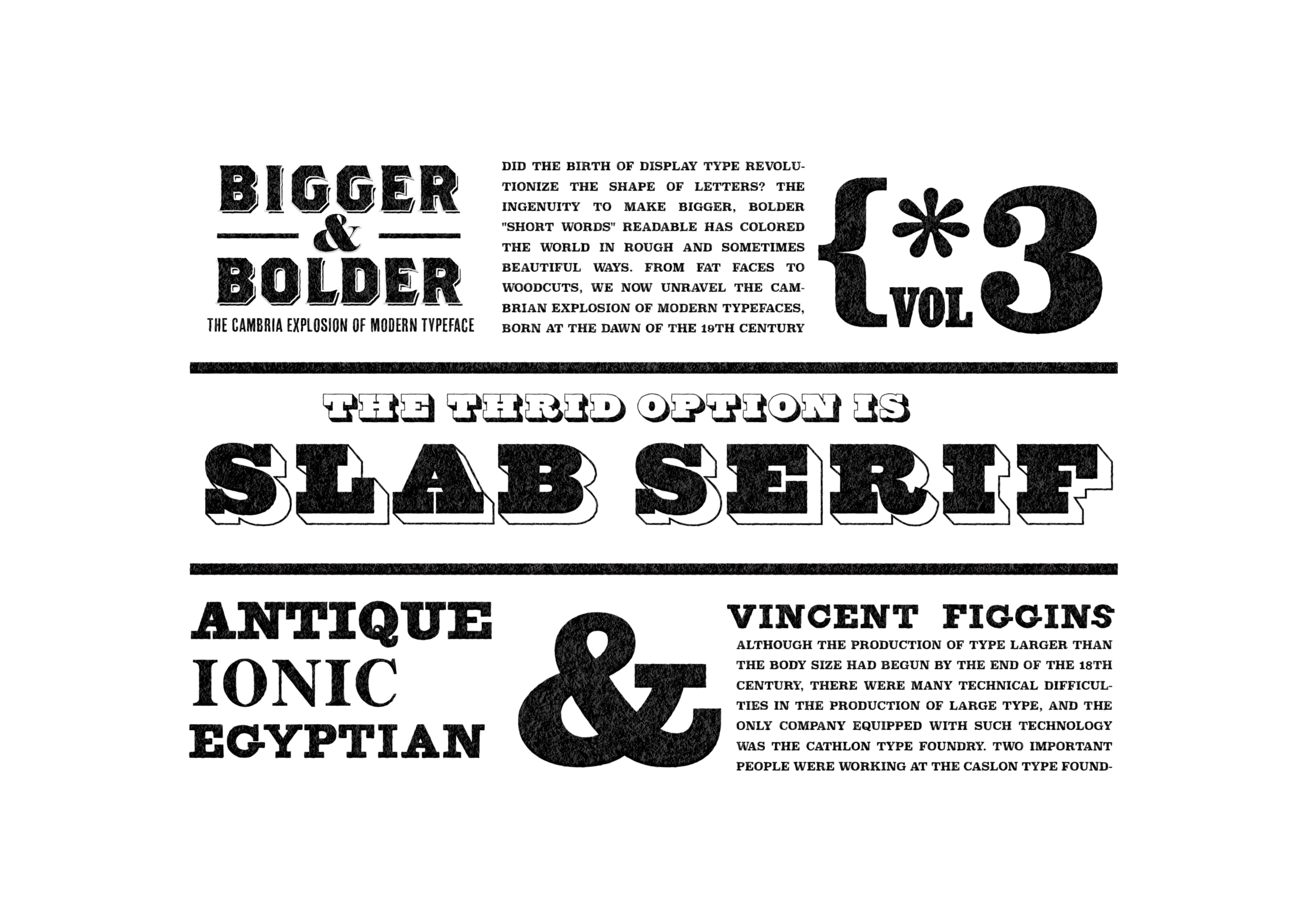
BIGGER & BOLDER
The Cambria Explosion of Modern Typeface
—Vol.03 第三の選択肢スラブセリフ—
THE THIRD OPTION IS SLABSERIF
第三の選択肢スラブセリフ
ファットフェイスが開拓したディスプレイタイプのデザインというフィールドを次に底上げしたのはスラブセリフでした。「大きい活字」「太い活字」を継承してさらに目立つ黒味の追求をセリフへと手をつけてゆくことで全く新たなジャンルを切り開いてゆきました。ローマン体がモダンになるためにダイエットしてきたあのセリフを、ファットフェイスすら拒んだセリフをこともあろうに極限まで太らせたのです。しかし、その新たな形、あらたなデザインはさまざまな可能性を切り開いてゆきました。縦横のコントラストをはじめこれまでの保守的な価値観を崩壊させ、視認性という一点で誰よりも意味のある存在に変わっていったのです。19世紀のロンドンから始まりアメリカへわたり、21世紀にいたるまで広告や雑誌、新聞、タイプライター、プログラムのコーディング用にと日常的に身近に存在し第一線で活躍するタイプフェイスのスタイルへと上り詰めた、そんなスラブセリフの旅路についてのお話です。
Slab serifs were the next step up in the field of display type design pioneered by Fat Face. By continuing with “large type” and “thick type,” Fat Face opened up a whole new genre by pursuing a more prominent black tone in the serifs. The Roman type had gone on a diet to become modern, and the serifs that even Fat Face refused to use were fattened up to the extreme. However, the new shape and design opened up a variety of possibilities.The typefaces collapsed the conservative values of the past, including vertical and horizontal contrasts, and became more meaningful than anyone else in terms of a single point: visibility.This is the story of the journey of slab serifs, which began in London in the 19th century, traveled to the United States, and then rose to become the leading typeface style in everyday life, present in advertisements, magazines, newspapers, typewriters, and for coding programs through the 21st century.
TYPE DESIGN OF SLABSERIF
スラブセリフのタイプフェイスデザイン
SLABSERIF
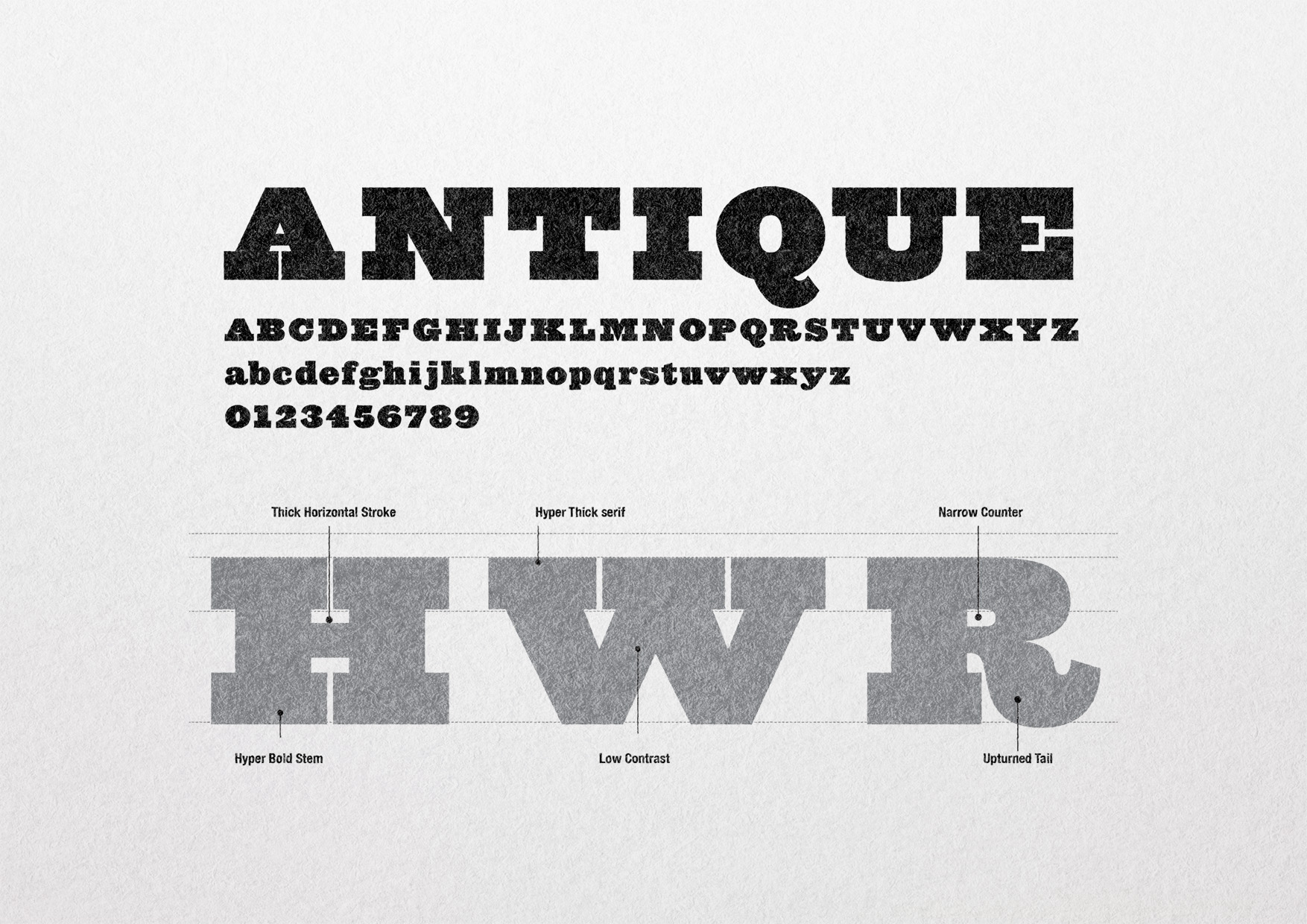
スラブセリフは、厚い板を意味するSLABという語の通り厚い板のようなセリフが特徴のタイプフェイスデザインのスタイル分類です。ファットフェイスと同様にモダンセリフのデザインを原型にとり、線を太らせるアプローチに加え縦横のバランスを変化させることで、より幾何学的な方向へと向かう発端となったデザインです。縦線のみではなくモダンセリフの特徴である細い横線を太らせることで、縦横の線幅のコントラストの比率抑えて黒みを強くつくります。さらにカウンターを広くとることで地と図のコントラストが上がり、このことで視認性の高さと可読性がましています。
Slab serif is a style classification of typeface design characterized by serifs that look like thick boards, as the word SLAB means thick board. Like the fat face, it is based on the modern serif design, but it is a design that began to move in a more geometric direction by changing the balance of vertical and horizontal lines in addition to the approach of thickening the lines. By thickening the thin horizontal lines, which are characteristic of modern serifs, instead of only vertical lines, the contrast ratio between vertical and horizontal line widths is reduced to create a strong black tone. In addition, by making the counter wider, the contrast between the ground and the figure is increased, thereby enhancing legibility and readability.
Clarendon/Ionic
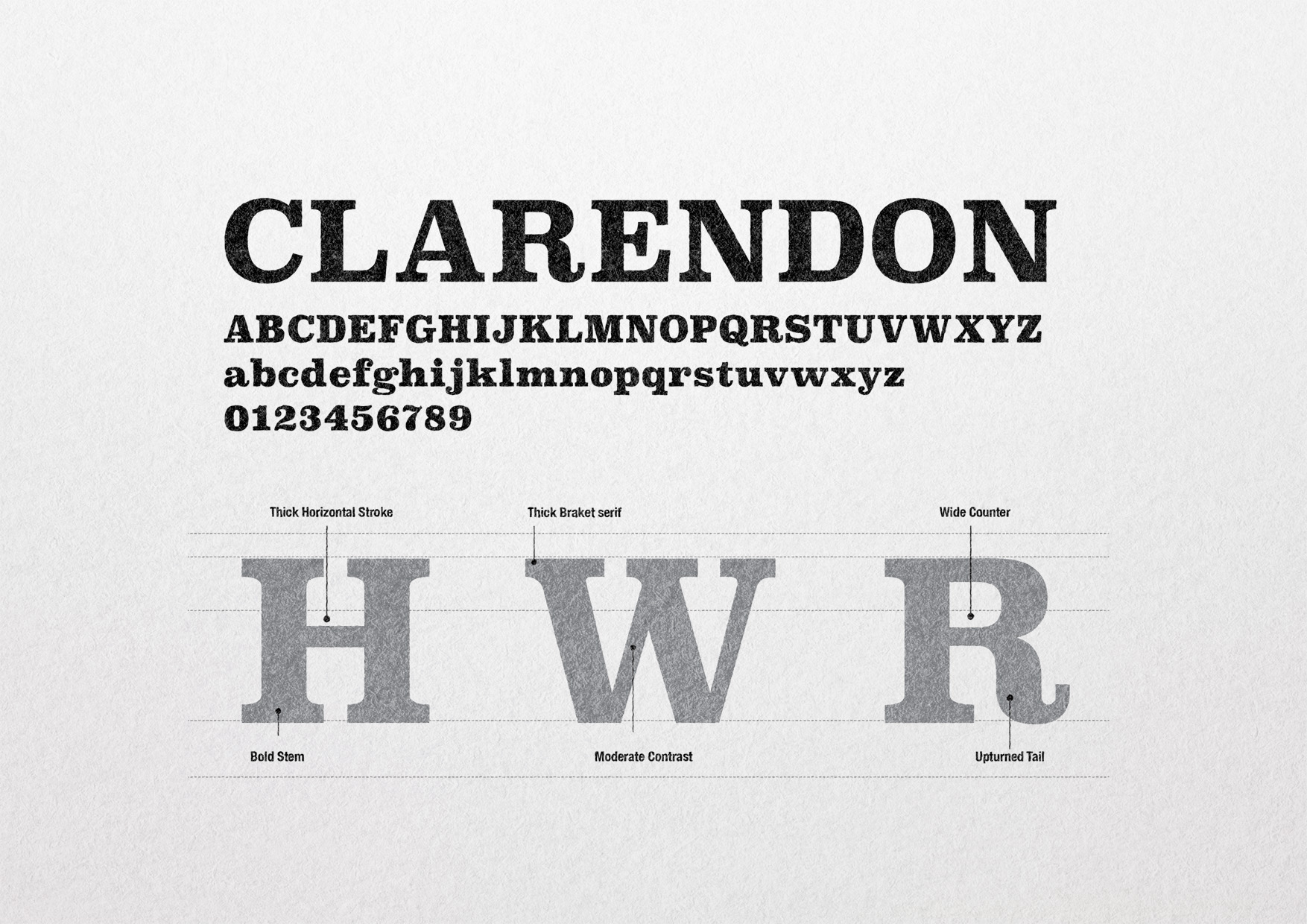
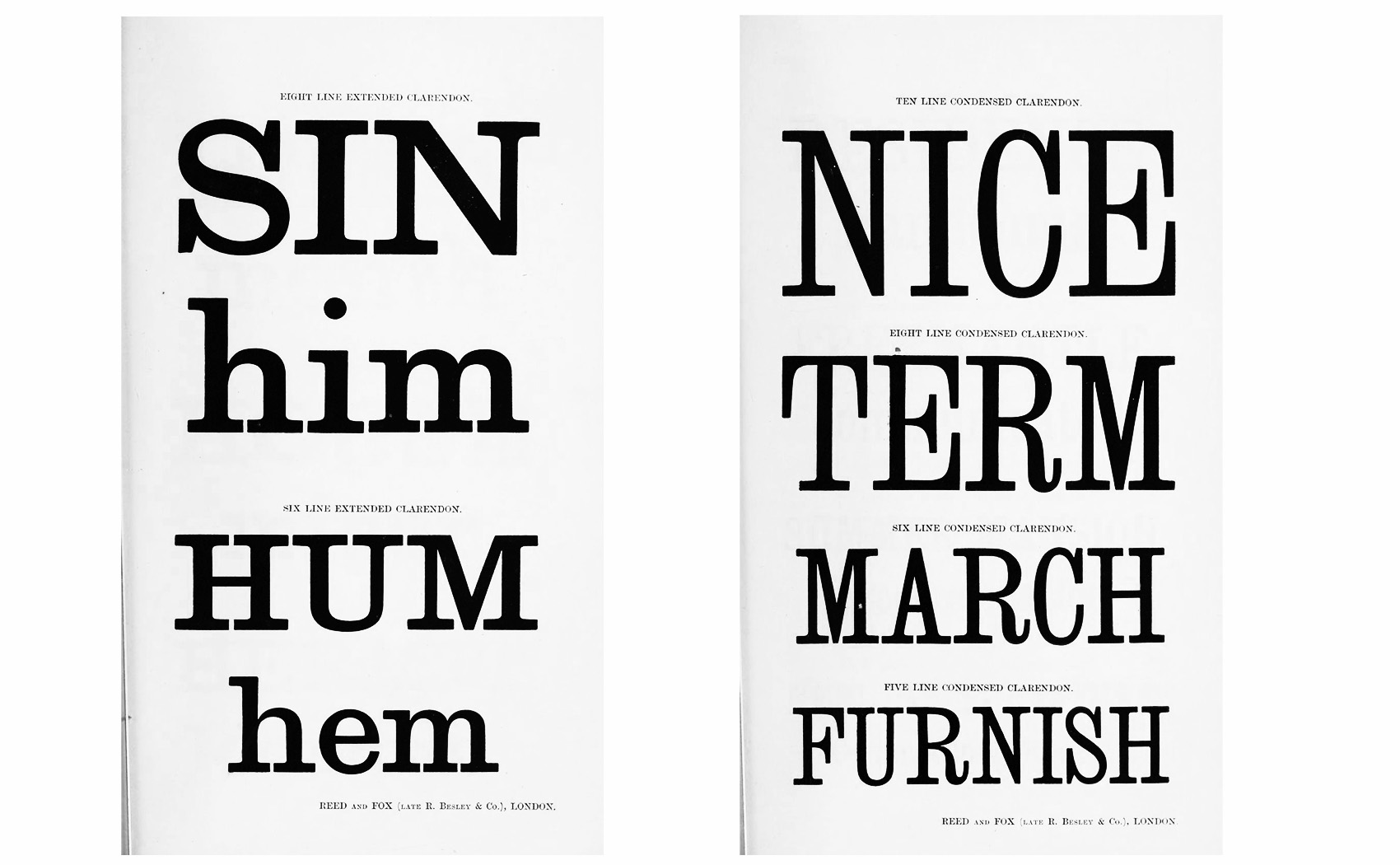
もともとはタイプフェイスの呼び名ですが、分類用語としてのクラレンドンは、スラブセリフの特徴である太い縦横の線幅にプラスして、ローマン体とスラブセリフの間を取り持つような厚いブラケットセリフをもつ特徴のタイプフェイスを指します。クラレンドン・イオニックともに、ローマンやサンセリフと比較する場合スラブセリフの範囲内に収まりますが、ブラケットセリフに特徴があるためスラブセリフをさらに区別する場合に使われる場合が多いです。
Originally a typeface name, Clarendon as a classificatory term refers to typefaces that have the characteristic thick vertical and horizontal line widths of slab serifs, plus thick bracket serifs that bridge the gap between Roman and slab serifs. Both Clarendon and Ionic fall within the range of slab serifs when compared to roman and sans serifs, but are often used to further distinguish slab serifs because of their bracket serif characteristics.
スラブセリフの誕生The Birth of Slab Serifs
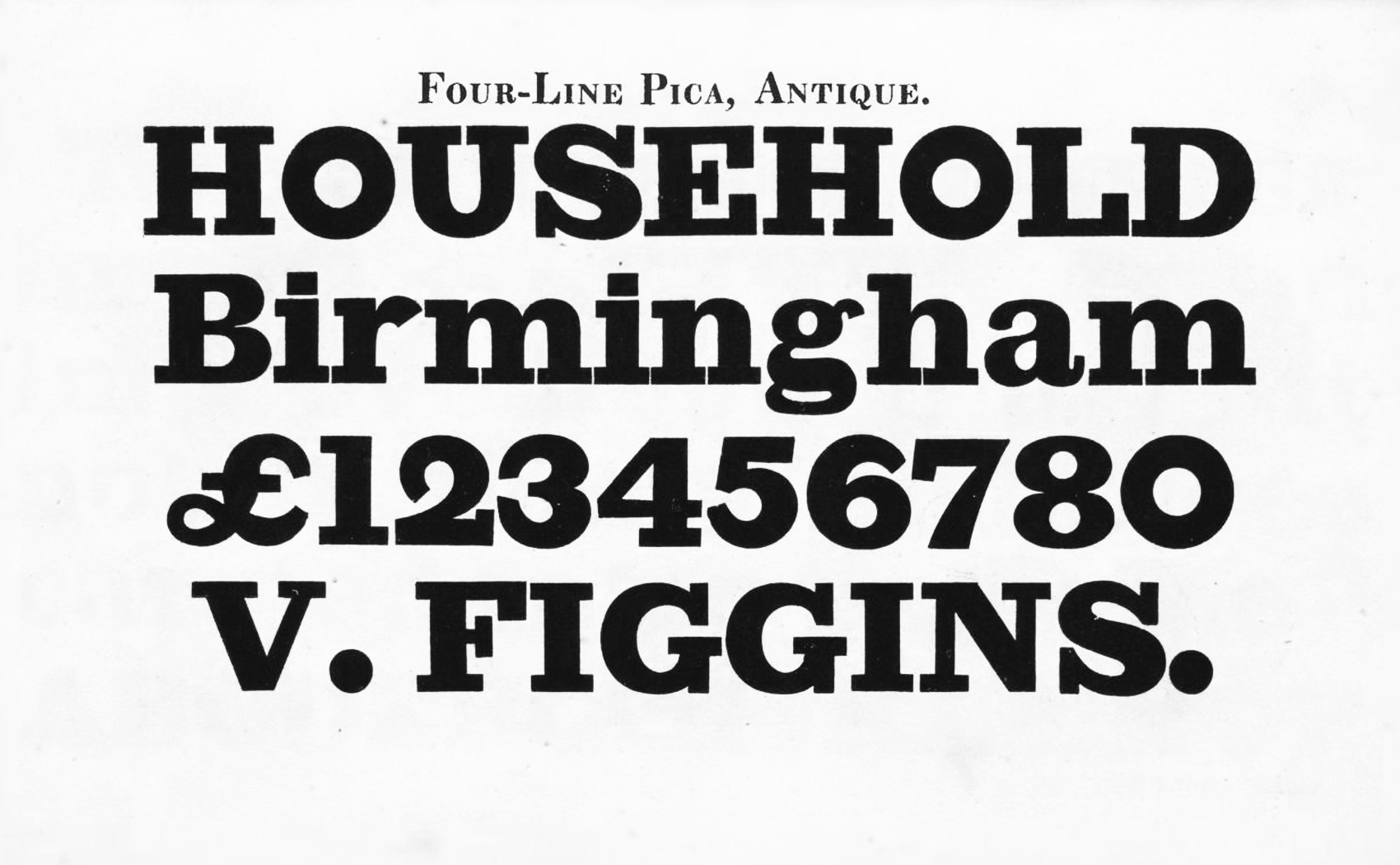
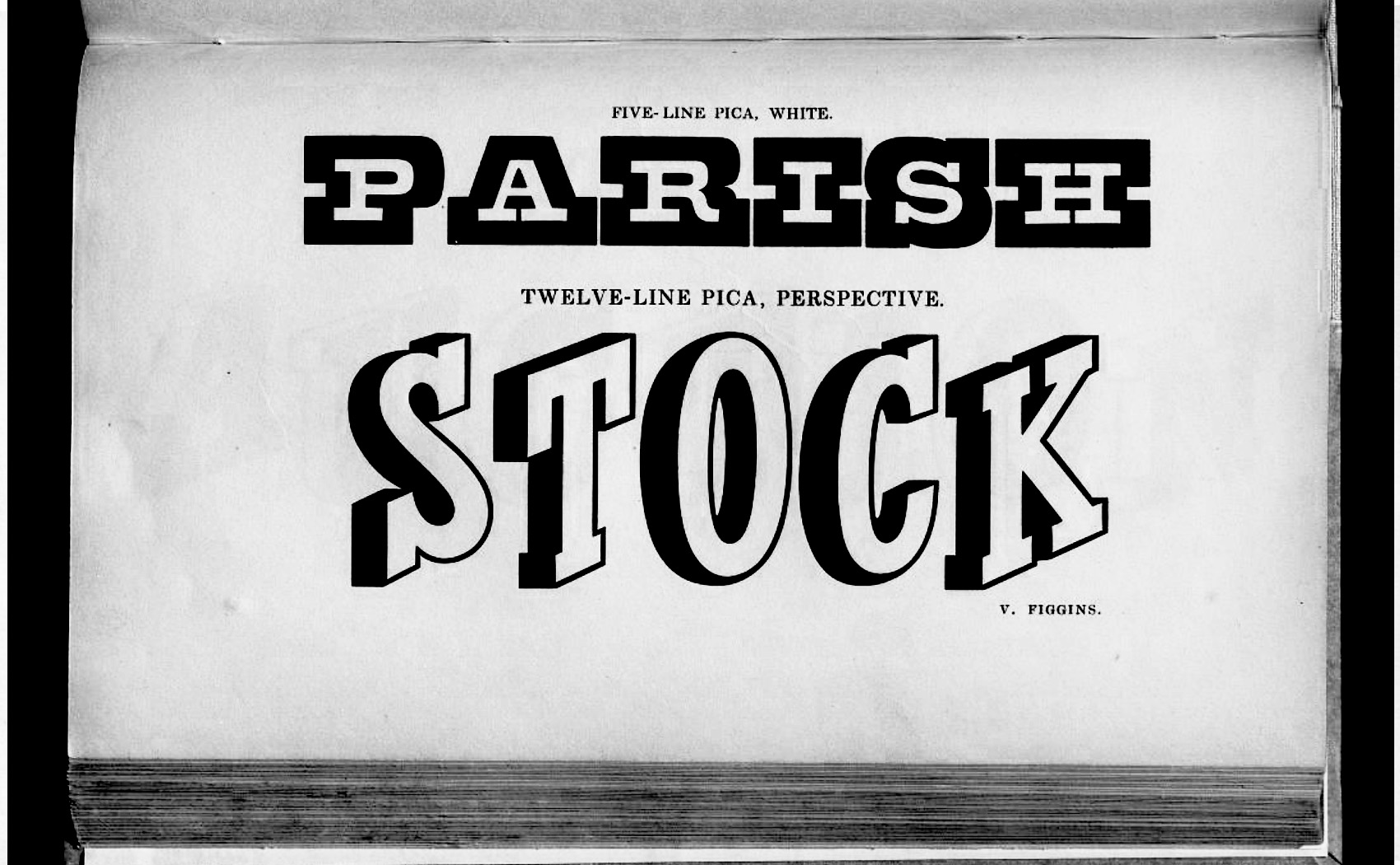
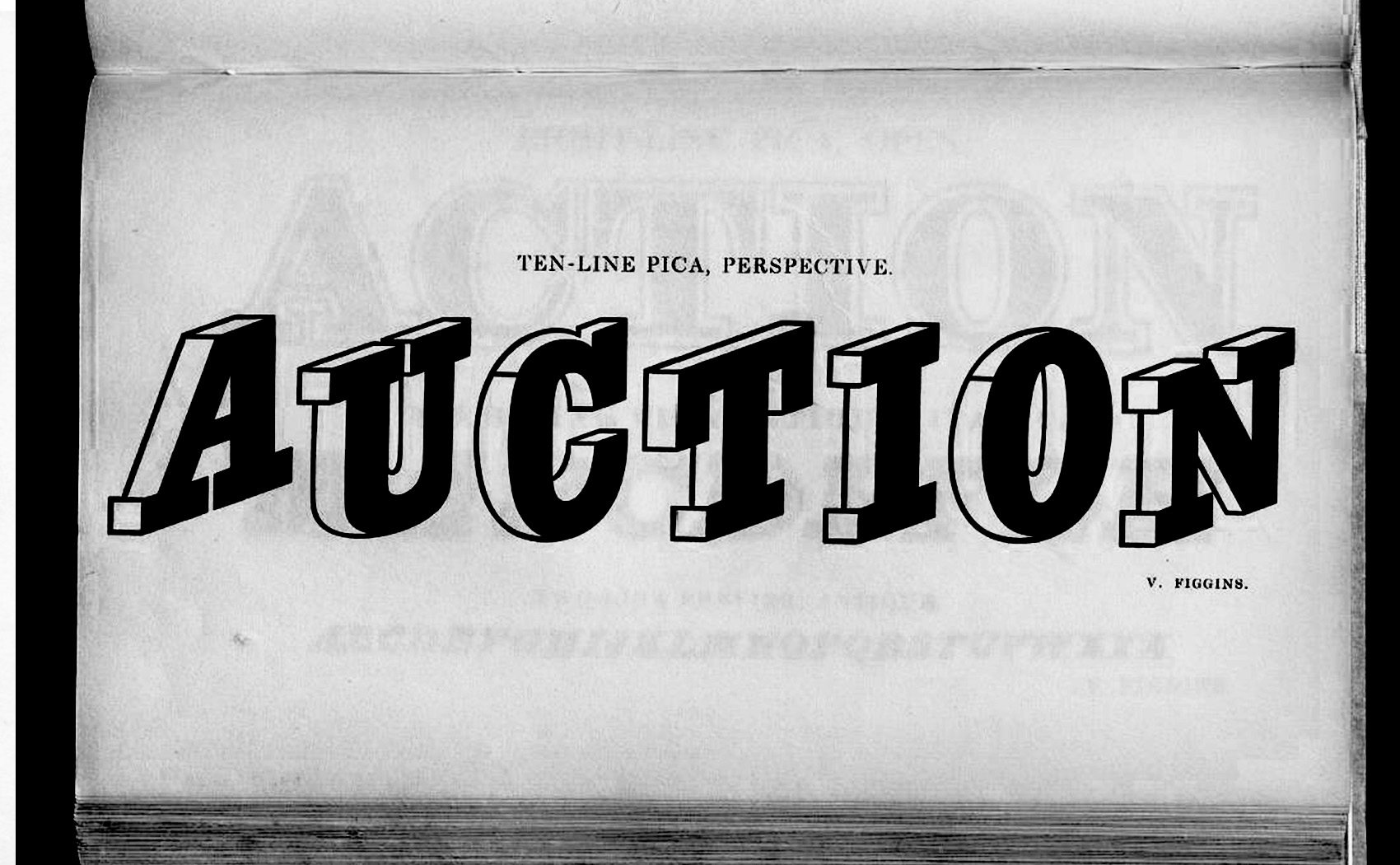
スラブセリフが活字として初めて登場したのは、1815年のフィギンズのカタログ見本帳に掲載された「ANTIQUE」が初のスラブセリフの特徴をもつデザインとされています。当時の状況からみて、文字のスタイル自体はプラカードやサインペインティングなどレタリング分野ですでに使用されていた可能性が高いとみられていますが、タイプフェイスの歴史において現在のスラブセリフの分類要件に当てはまるデザインが完成したのは1815年の”Antique”という説が通説となっています。
Slab serifs first appeared in the 1815 Figgins catalog sample book “ANTIQUE,” which is believed to be the first design with slab serif characteristics. Although it is very likely that the typeface itself was already in use in the area of signage, such as placards and sign painting, it is believed that “ANTIQUE” was the first design in typeface history to meet the current classification requirements for slab serifs. The general theory is that the design that meets today’s slab serif classification requirements was completed in 1815.
タイポグラフィーTypography
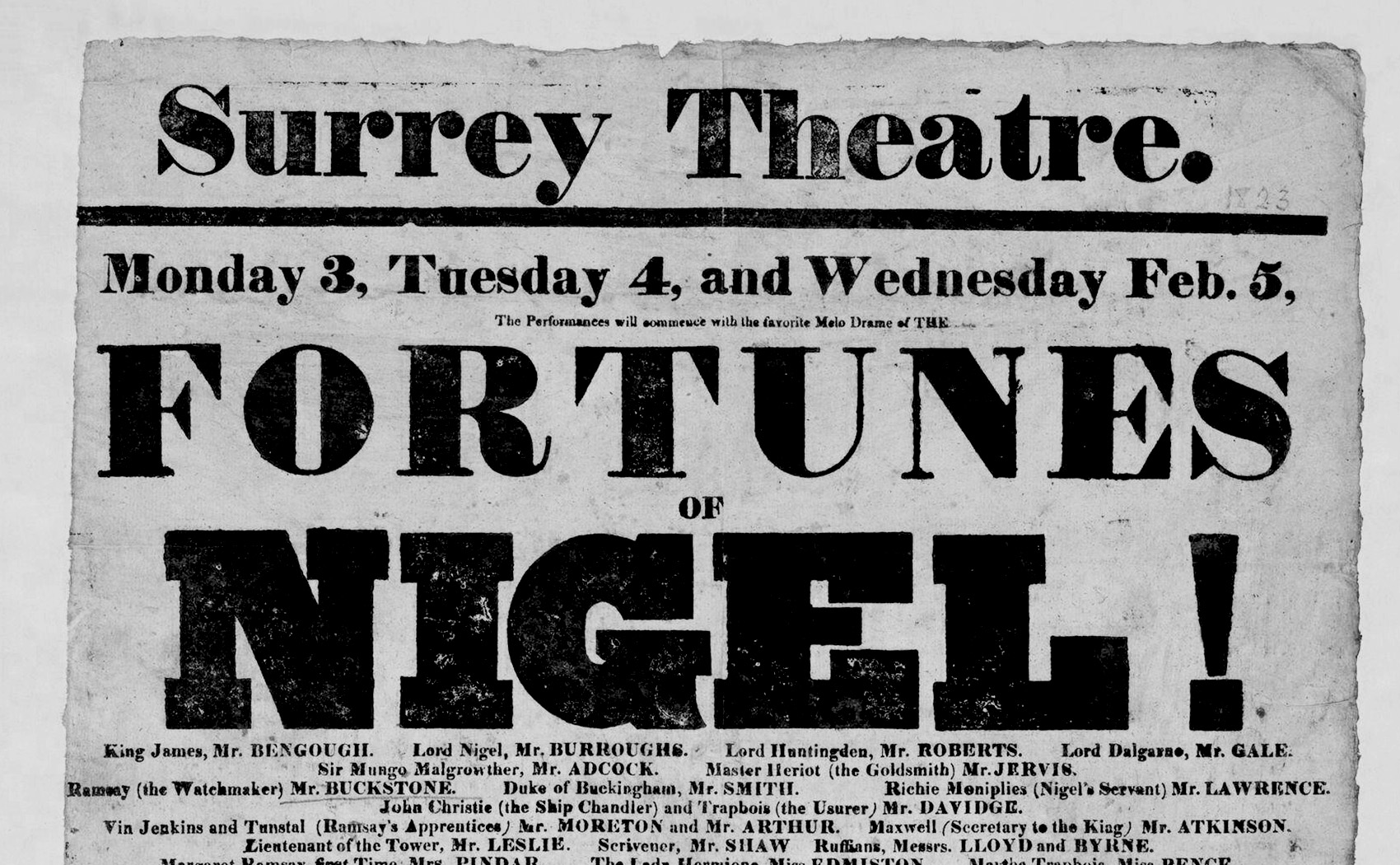
スラブセリフはファットフェイスと同様にポスターやプレイビルなどでの「短い言葉」を「大きな文字」で伝える目的を考えたディスプレイ用途として出発しました。当時のプレイビルなどで確認すると、先行しているファットフェイスと混植して使われることで、タイプフェイスの種類で情報のコントラストをつける以外にも視覚的なコントラスのために使われていることがわかります。ファットフェイスのヘアラインや曲線が目立つのにたいして、スラブセリフのモノラインに近い黒みの強さと直線的な印象がより明確に紙面の黒味をあげ今日的なモダンタイプに続くようなソリッドで幾何学的な印象を残すものとなっています。
Slab serifs, like fatfaces, started out as a display usage for the purpose of conveying “short words” in “large type” on poster and playbills. If we check with playbills and other materials of the time, we can see that it was used for visual contrasts other than to contrast information with the typeface type by being used mixed with the preceding fatface. In contrast to the prominent hairlines and curves of fat face, the strong blackness and linear impression of slab serifs, which are similar to monolines, give the paper a more pronounced black color and leave a solid, geometric impression that follows the modern type used today.
スラブセリフのバリエーションSlab serif variation
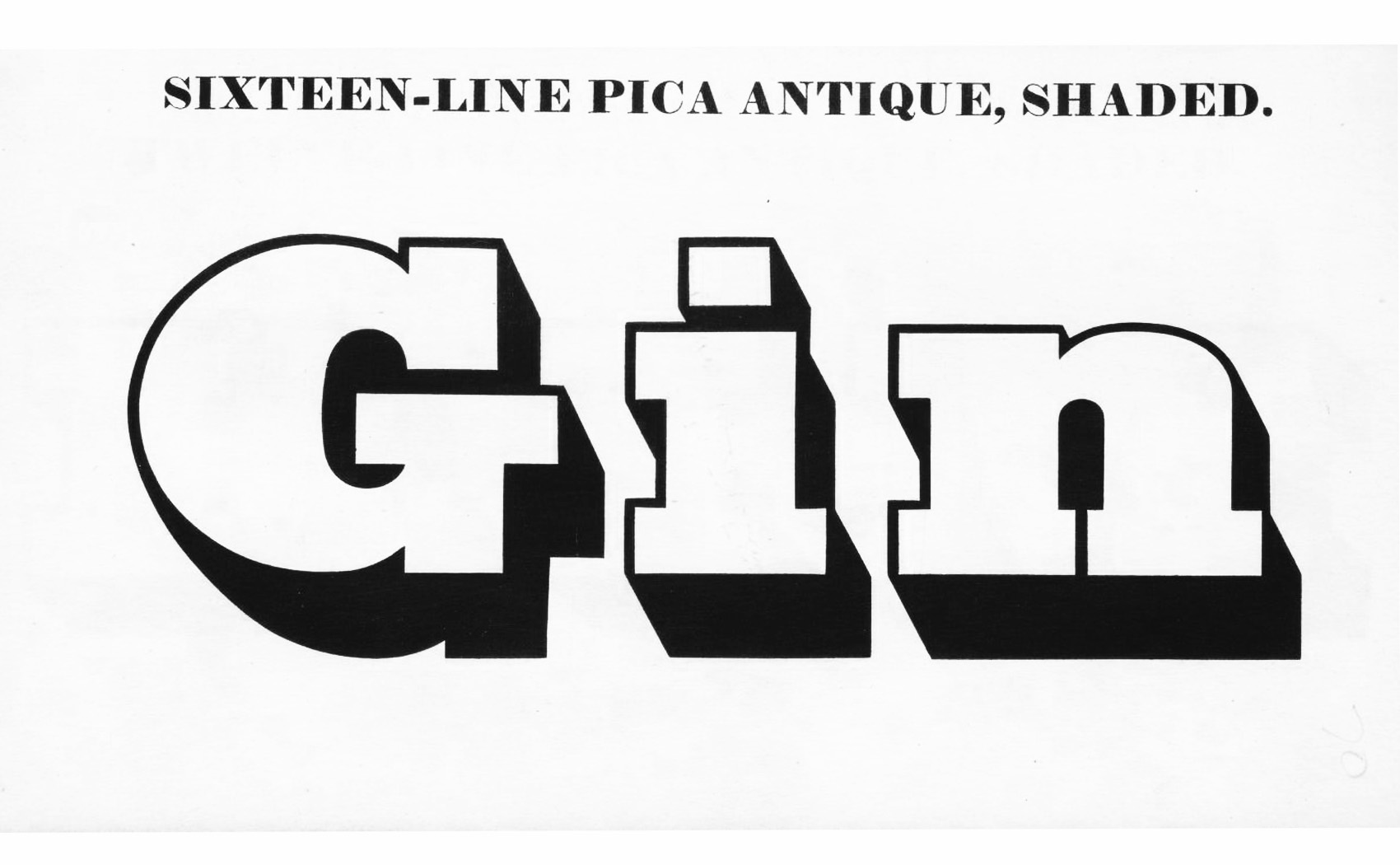
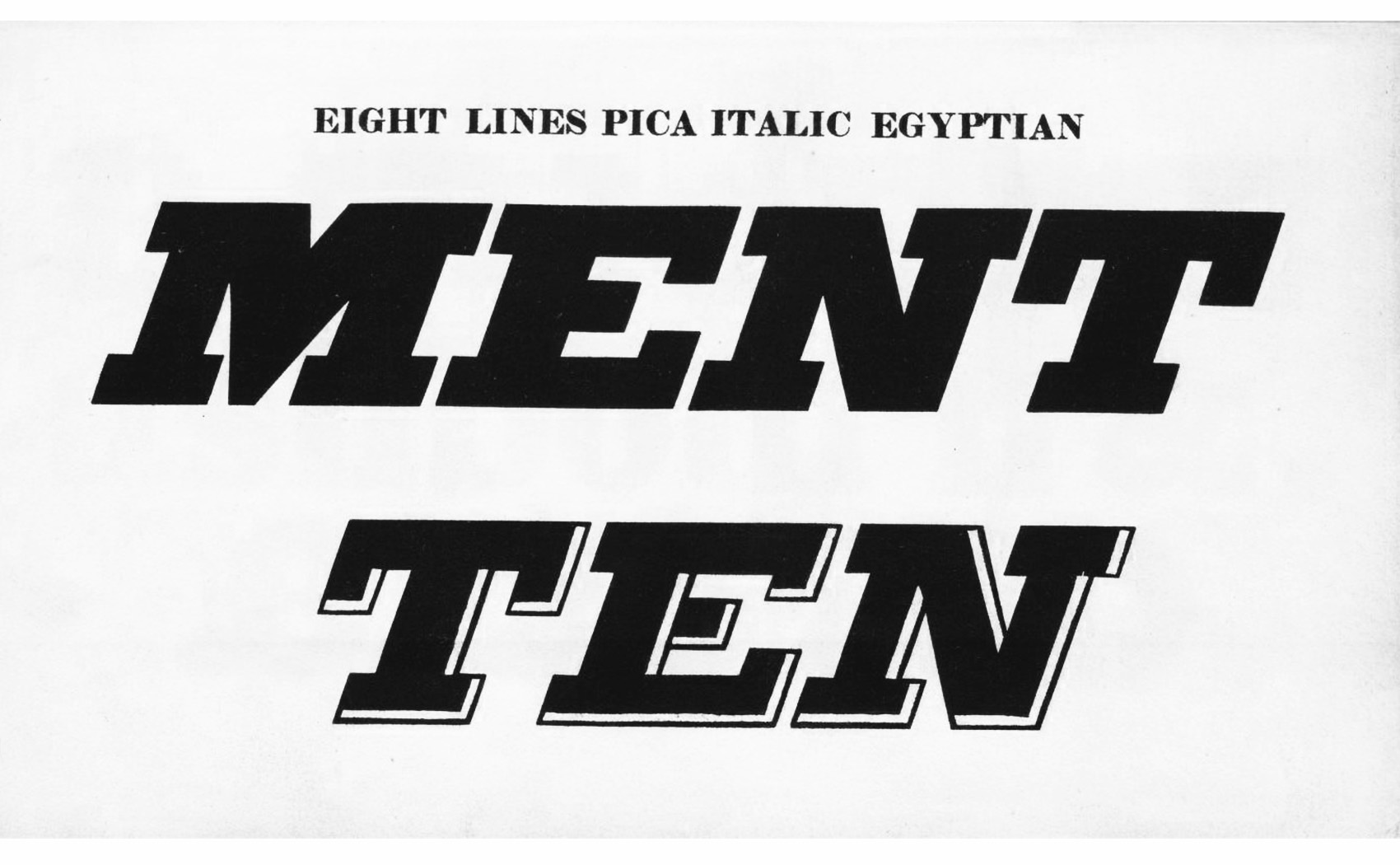
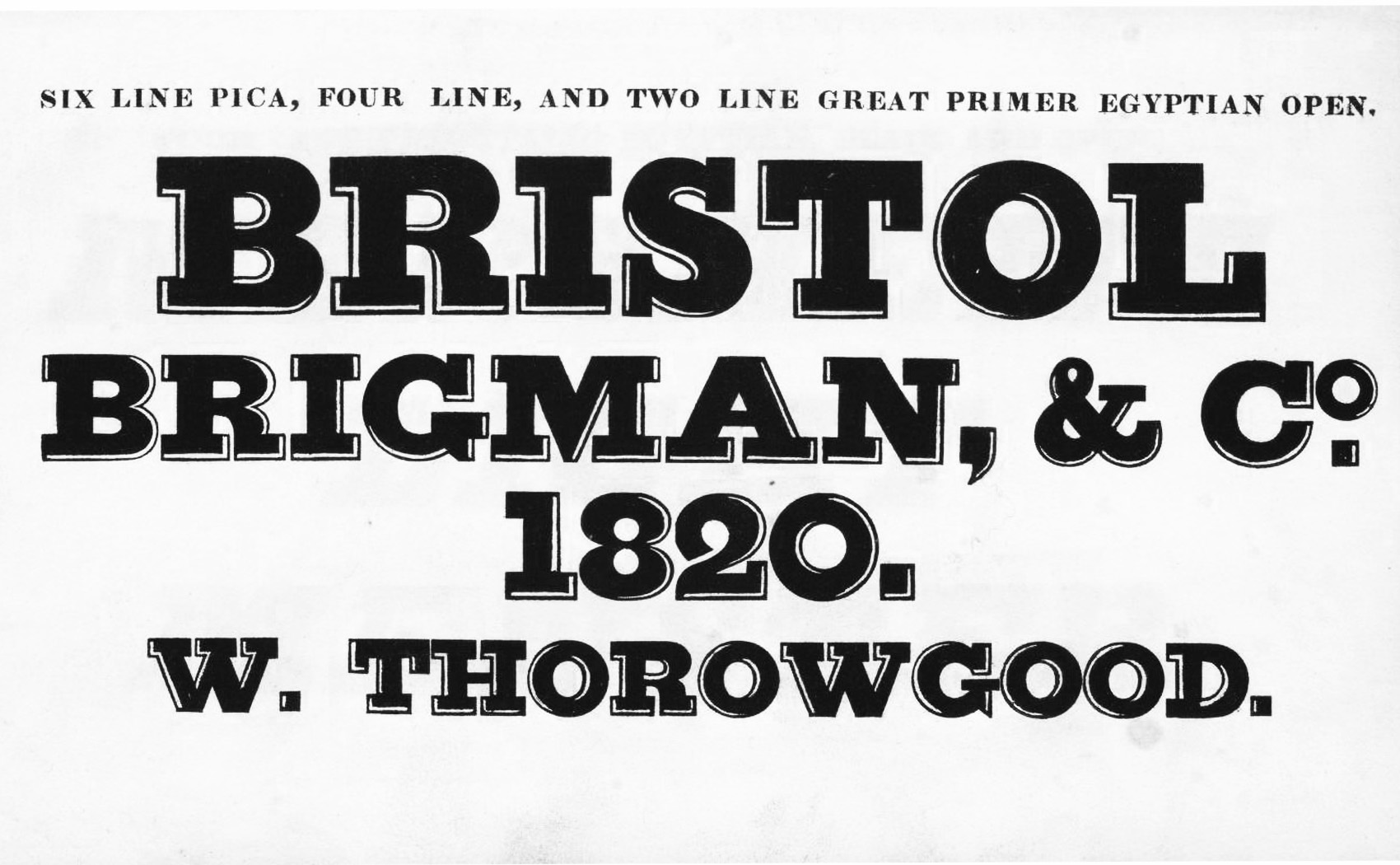
ファットフェイスと同様に、太さによる展開、装飾的なバリエーションは、イタリック、オープンに加え、シェイデッド(影をつけて立体的にしたもの)などが豊富に加えられています。
As with fat faces, development by thickness and decorative variations are added in abundance: italic, open, as well as shaded (shadowed and three-dimensional).
Clarendonディスプレイから本文へThe Birth of Clarendon . From Display to Text
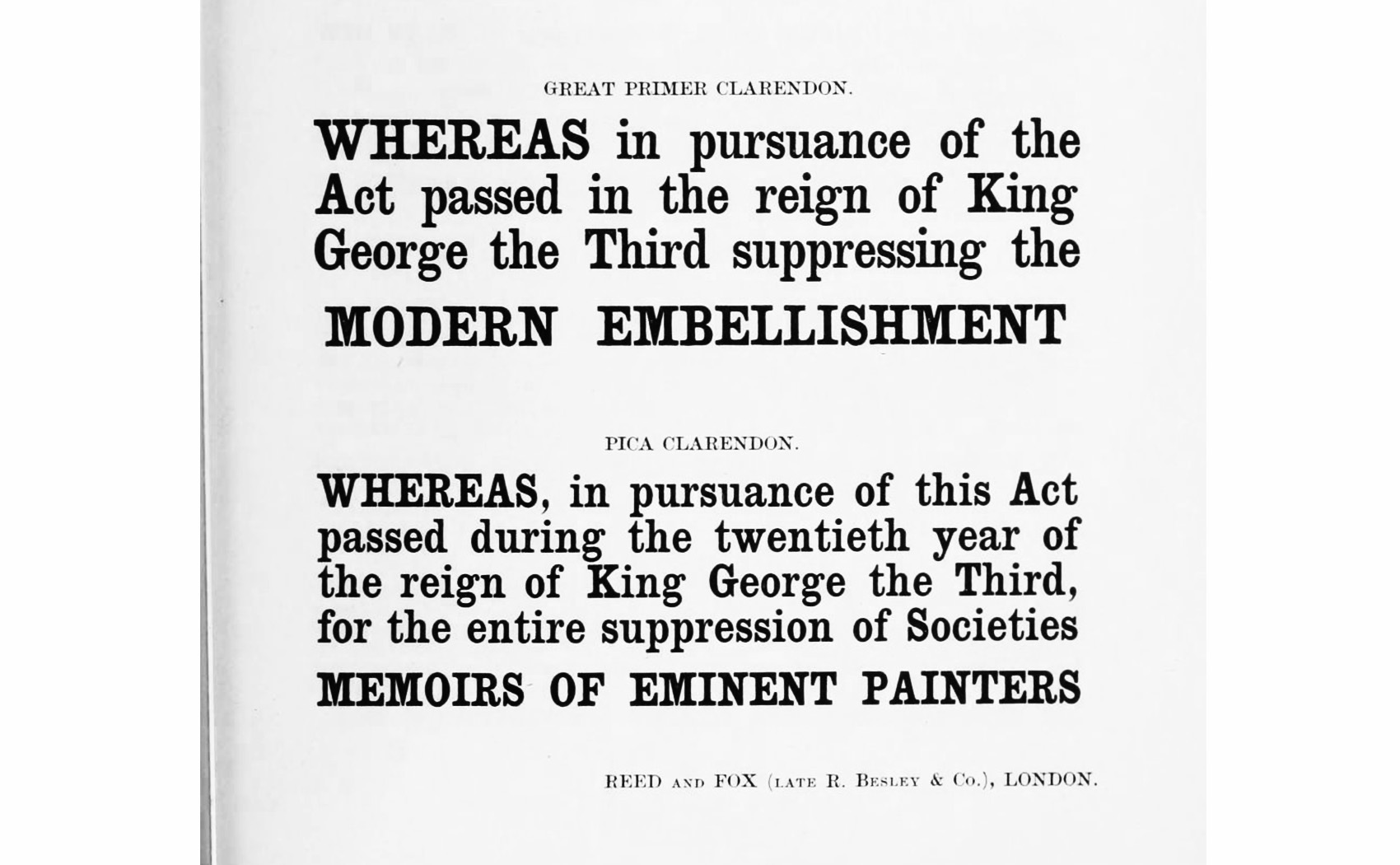
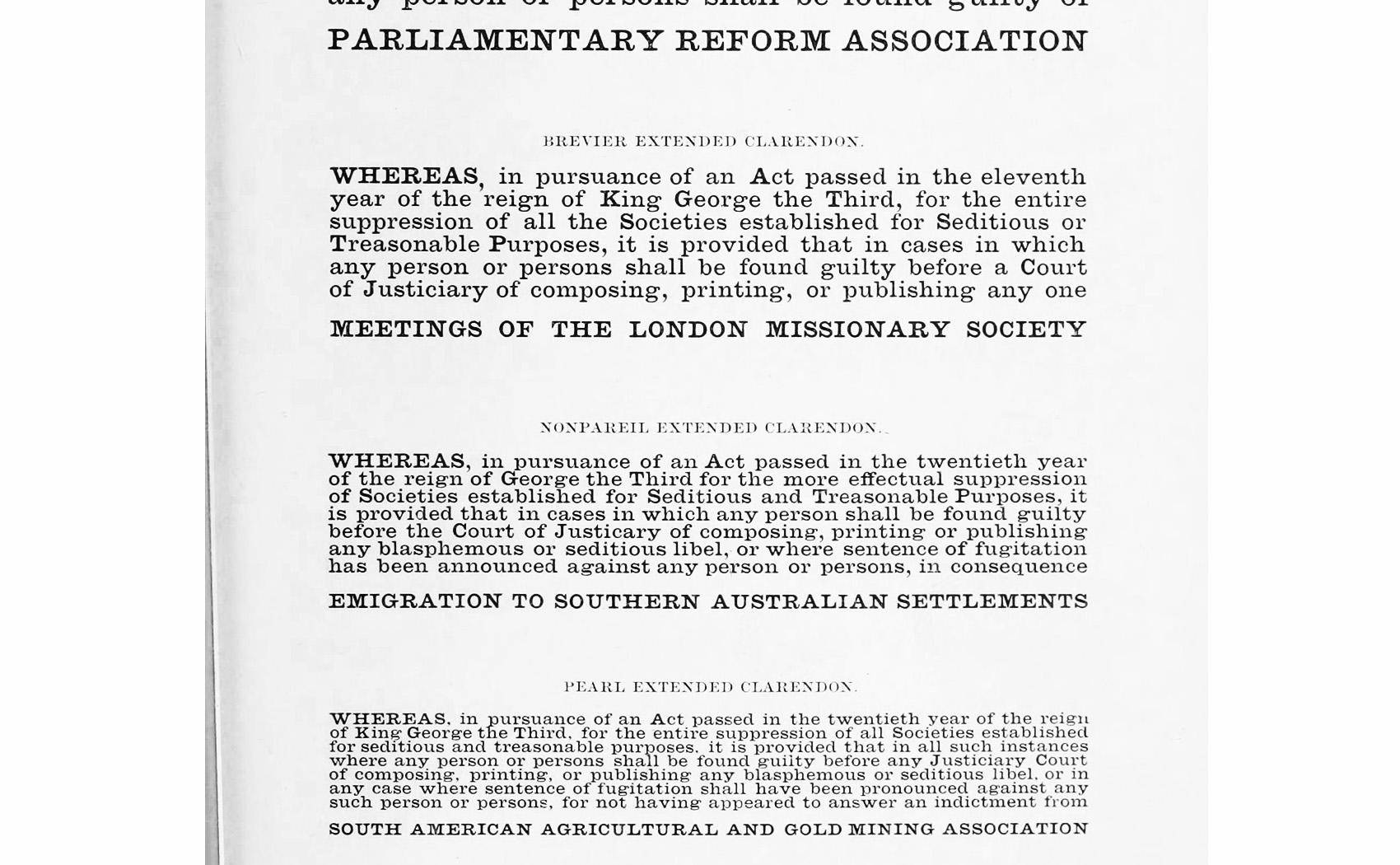
少し時がながれ、フィギンズの”Antique”にもデザイン違いのバリエーションがいくつか登場します。1833年ごろにブラケットセリフをもった大文字の”Antique”のデザインが登場し、1842年にキャスロンファウンダリーも”IONIC”として小文字をもつ同様のデザインを発表しています。読みやすさにつながるブラケットセリフをもつ線幅の太いタイプフェイスのデザインは、本文へ用いることも想定した方向として発展してゆきます。そして、満を持して1845年にスローグッドのファンストリートからClarendonが登場します。 マイルドな太さとブラケットセリフが特徴のクラレンドンは、ディスプレイの用途の特徴をもち、すこし長めの文章に対しても使うことを可能にしたことでゲームチェンジャーとなり市場を席巻します。クラレンドンはタイプフェイスとして世界で初めて意匠登録され、3年の登録期間の終了後すぐに他のファウンダリーにコピーされてしまいますが、このスタイルを表す普通名詞になるほど人気となりました。そしてデザインを行ったパンチカッターのロバート・ベースリーRobert Besley (1794–1876)はのちにロンドン市長にまで上り詰める人物となります。
A little later, several variations of Figgins’ “Antique” design appeared, including a bracket serif uppercase “Antique” design around 1833, followed in 1842 by a similar lowercase “IONIC” design by Caslon Foundry. The “Antique” design with bracket serifs for readability was introduced in 1842. The design of the typeface, with its thick lines and bracket serifs that lead to easier readability, was also developed for use in the text.The Clarendon appeared in 1845 on Thorogood’s Fann Street.With its mild boldness and bracket serifs, Clarendon was a game changer and took the market by storm. Clarendon was the first typeface design in the world to be registered, and although it was copied by other foundries soon after the three-year registration period ended, it became so popular that it became a common noun for the style. The punch cutter Robert Besley (1794-1876), who designed it, would later become the mayor of London.
本文のボールドとしてAs Bold in the body text
現在のフォントにはファミリーとしてさまざまな太さの展開がありますが、クラレンドンの登場以前、本文書体の強調方法は主にイタリックでされており、太さ(ボールド)での強調する概念がありませんでした。そしてクラレンドンの登場で、現在のフォントのボールドとしての使われ方として歓迎されてローマン体と混植されることになります。これがその後にサンセリフなどを経由してフォントを同一デザインでの太さの展開へとつながるフォントファミリーの流れ繋がってゆきました。
Before the appearance of Clarendon, the emphasis of this font was mainly in italics, and there was no concept of emphasis in bold. With the advent of Clarendon, the font was mixed with the Roman font, which was welcomed for its use as the bold of today’s fonts. This led to the development of a family of fonts that later developed into sans-serifs and other fonts with the same design and thickness.
スラブセリフの名称A complication of names
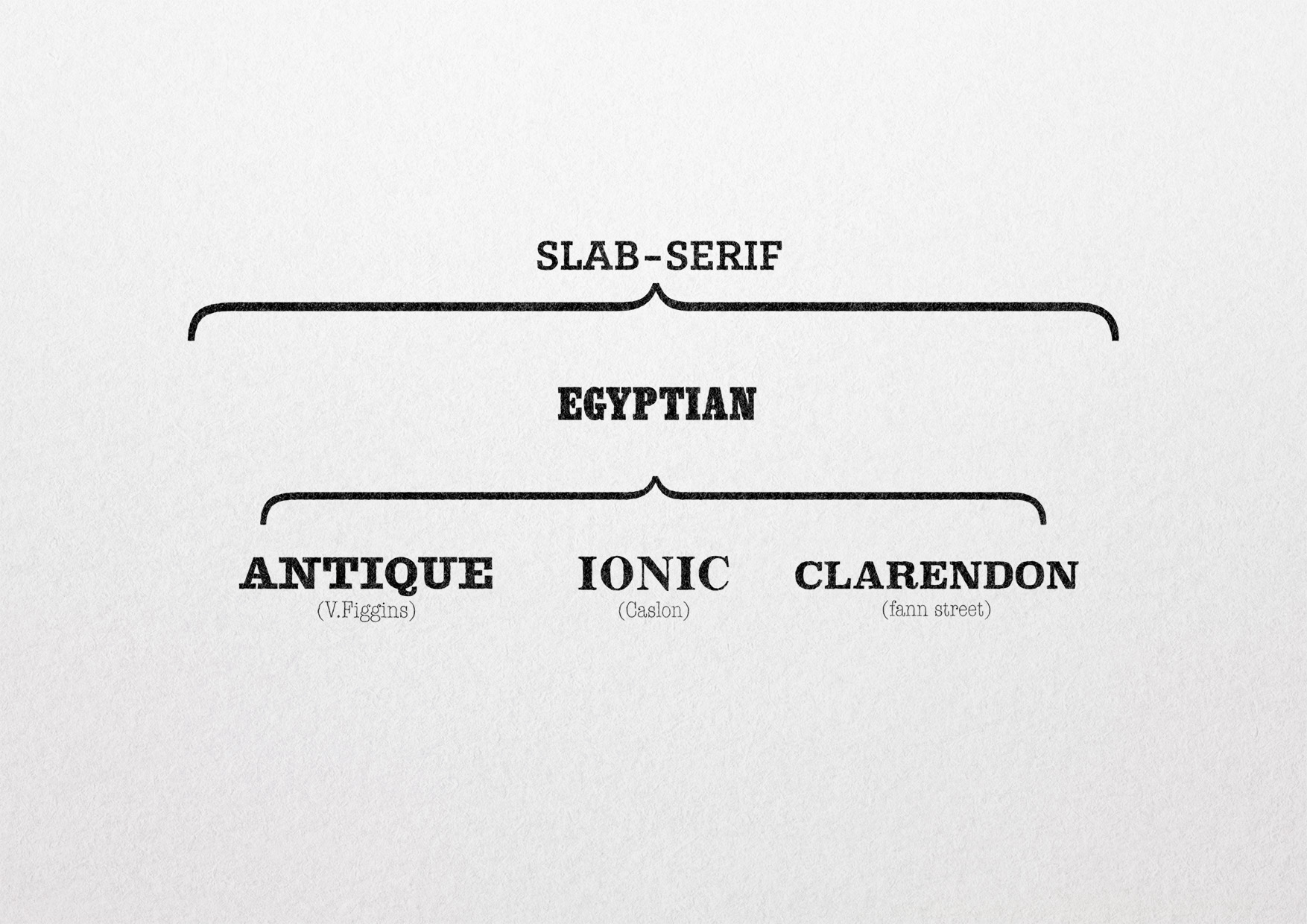
EGYPTIAN/ANTIQUE/IONIC/CLARENDON
当時のスラブセリフを表すデザインの分類名は各ファウンダリでつけられていました。その後それらを総称して一般名詞化したのがEGYPTIAN エジプシャンという名称です。スラブセリフという呼び名は、エジプシャンをさらに特徴でわけデザインの分類名として20世紀に入ってから便宜的に使われているものです。当時タイプフェイスのデザインは同系統のものをナンバリングで示す場合があり、スラブセリフ的な特徴をもつものをフィギンズはAntique、キャスロンはAntiqueやIonicという名称を使っていました。スラブセリフをエジプシャンと並列に表記するSlab-srif / Egyptianやクラレンドンと同じ特徴をもつIonicをclarendon/ionicなど並列に表記する場合もあります。さらにまぎらわしいことに、キャスロンが1813年に現在のサンセリフ書体の特徴をもつデザインをエジプシャンという名前で発表しており、その同じ特徴のデザインをフィギンズがサンセリフと名付けてカタログにのせて販売し現在のサンズセリフの区分の源流になっていることで、当時の一般名詞のエジプシャンとわけてキャスロンのサンセリフをCaslon Egyptianと表記する場合もあります。
At the time, each foundry had its own classified name for the design that represented slab serifs. The name EGYPTIAN was then adopted as a generic term to refer to all of them. In the 20th century, the term “slab serifs” was used for convenience as a classification of designs that were further subdivided by the characteristics of Egyptian. At that time, designs were sometimes numbered in the same family, with Figgins using the name Antique and Caslon using Antique or Ionic for those with slab serif characteristics. Slab-srif / Egyptian, which is a parallel name for Slab-srif with Egyptian, and Ionic, which has the same characteristics as Clarendon, are sometimes described in parallel, such as clarendon/ionic.More confusingly, in 1813, Caslon introduced a design with the characteristics of the current sans-serif typeface under the name Egyptian, and Figgins cataloged and sold a design with the same characteristics under the name sans-serif, which is the origin of the current sans-serif classification, The sans serif of Caslon is sometimes referred to as Caslon Egyptian, to separate it from the common noun Egyptian of the time.
第三の選択肢The Third Option
欧米では当然のように使われていて、ディスプレイから本文にいたるまで、フォーマルからカジュアルまでつかえるオールラウンダーなのに日本では日陰の存在であまり知られていない。というかほぼ無視されてしまっています。その理由として、和文における分類が、明朝体とゴシック体の二つのみをスタイルの違いとして認識しているため、それに対応するカタチで欧文のタイプフェイスが混植して使用されるためバイナリになってしまっているのではないかと推測しています。巷では右か左か、男か女かなんてバイナリな古くさい考えを捨てて、もっと自由に包摂的な社会をなどと言われていますが欧文タイプの世界でもローマンかサンセリフかなんてバイナリな考え方は早く改めて、もっと自由に楽しんでもらいたいものです。どっちつかずの真ん中あたりで正解を見出し、みんなが心地よく生きる。そんな第三の選択肢は『スラブセリフ』にかかっているのかもしれませんね。最後に、当時のオリジナルデザインのフォントを元に様々な形でリバイバル・デジタイズされていますので、その一部を紹介します。
Although it is used as a matter of course in Europe and the United States, and is an all-rounder that can be used for everything from displays to text, from formal to casual, in Japan it has a shady existence and is not well known. In fact, it is almost completely ignored. I suspect that the reason for this is that the classification of Japanese text is based on the recognition of Mincho and Gothic as the only two different styles, and European typefaces are used interchangeably with Mincho and Gothic, resulting in a binary system. People are saying that we should abandon the binary, old-fashioned ideas of left or right, male or female, and create a freer, more inclusive society, but even in the world of European typefaces, I hope that people will quickly change their binary ideas of Roman or sans serif, and enjoy their typefaces more freely. Find the right answer somewhere in the middle, and let everyone live comfortably. Such a third option may depend on “slab serifs”.Finally, some of the fonts have been revived and digitized in various forms based on the original design of the time.
-
Egizano
Monotypeのリバイバルしたヴィンセント・フィギンズ1815年のエジプシャン
Monotype’s Revived Vincent Figgins 1815 Egyptian

-
Caslon iconic no2
本文からディスプレイまで揃ったキャスロンのイオニックのリバイバル
Revival of Ionic in Caslon, complete from text to display.

-
FIGGINS ANTIQUE
1815年のヴィンセント・フィギンズのANTIQUEのリバイバル。
Revival of ANTIQUE by Vincent Figgins in 1815

-
Monotype Clarendon
1845年 R. BesleyデザインのClarendonのデジタルリバイバル
1845 Digital Revival of Clarendon designed by R. Besley
